A robot can build a record of your face, voice, movements, and daily routines without knowing anything about you in the human sense. The useful question is what it stores, what it can infer, and who can access that record.
- Face recognition can link a camera view to a saved person profile.
- Voice identification can connect spoken commands to one household member.
- Routine data can show when people enter rooms, leave home, or ask for help.
What a robot can recognize
With cameras, a robot may use face recognition to tell one person from another. The system turns a face image into a mathematical pattern, then compares that pattern with saved profiles. It may label someone as “Alex” without knowing Alex’s job, mood, or plans.
Voice systems work in much the same way. A microphone records speech, while software checks the speaker’s voice pattern and the words they use. This can let a home robot apply one person’s settings to another person’s request.
Movement tracking adds another layer. Person re-identification links views of the same person across different cameras or across time. That may help an autonomous system avoid bumping into someone, follow a worker, or return to a charging dock after a task.
These tools deal in patterns. They don’t create a human memory of the person behind the pattern.
Routine can reveal more than a name
Reading private messages isn't necessary to learn useful details. Repeated observations can show when a home is empty, which rooms someone uses, when a worker takes a break, or how often a person needs help with a task.
That information can improve the robot’s response. A service robot may move more slowly near someone it has identified as needing support. A warehouse robot may adjust its route after seeing a worker in the same aisle. Those actions depend on the robot’s software and sensors, not on human judgment.
The risk comes from keeping the record longer than the task needs. A robot that needs to recognize a person at the front door may not need months of movement logs. Ask where the data goes, how long it stays there, and whether you can delete it.
Privacy claims need the robot, its sensors, and its data settings named together. Robot24.com's reporting on robot data can place a maker's claim beside the data collected, storage period, and deletion controls before the next section looks at where that claim can fail.
Where the claim can fail
Recognition can break when the camera view changes, a person wears a mask, several people speak at once, or lighting drops. A system trained for one building may also work poorly in another building with different rooms, clothing, or background noise.
A label can be wrong in a way that affects access or safety. If a robot confuses two people, it might open a door for the wrong person, send a private message to the wrong account, or apply the wrong movement setting.
There is another limit. A robot may store that you visit a room every morning, yet it may not know why. It can predict a repeated action without knowing the reason behind it. I’d treat any claim that a robot “knows you” as a claim about stored patterns until the maker shows how the system works.
A practical privacy check
Before buying or installing a robot with cameras or microphones, check these points:
- Name the sensors: Find out whether it uses cameras, microphones, LiDAR, or all three.
- Check local storage: See whether recordings stay on the robot or go to a remote server.
- Set the retention period: Pick the shortest period that still supports the task.
- Test deletion: Confirm that removing a profile also removes related recordings and logs.
- Limit accounts: Give access only to the people who need control of the robot.
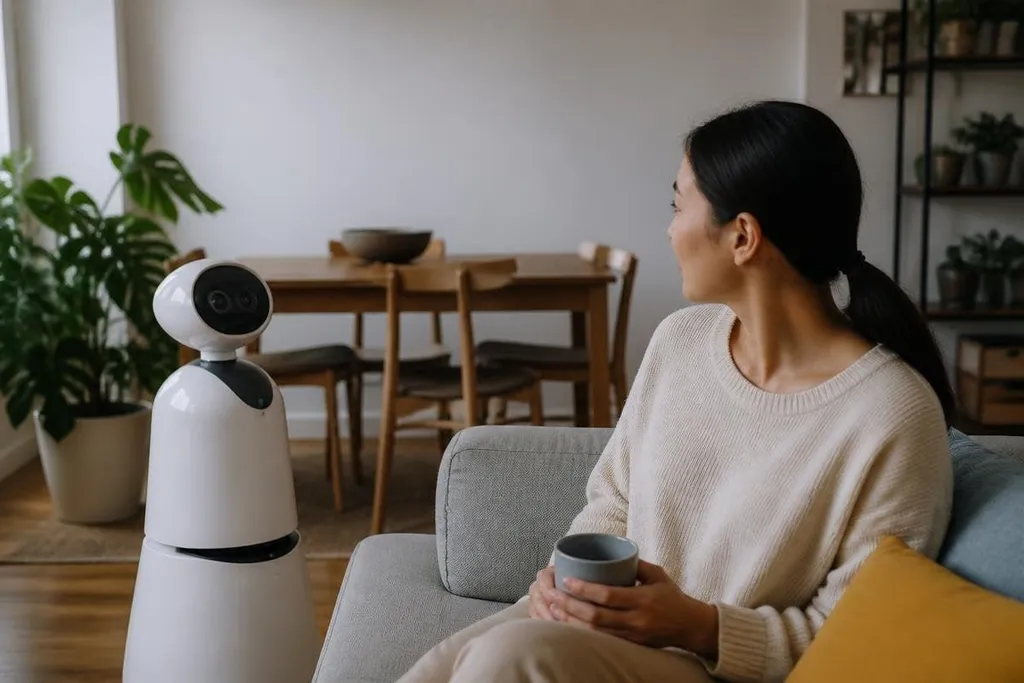
A robot may appear personal because it remembers your route, responds to your voice, or changes its timing around you.
That behavior can come from a face profile, a voice match, location logs, and a set of rules. Before you call that knowledge, ask what the robot recorded, what it inferred, and whether you can remove the record.