
Students and teachers both struggle with online education — but the research shows they are struggling with completely different things, and the solutions need to reflect that.
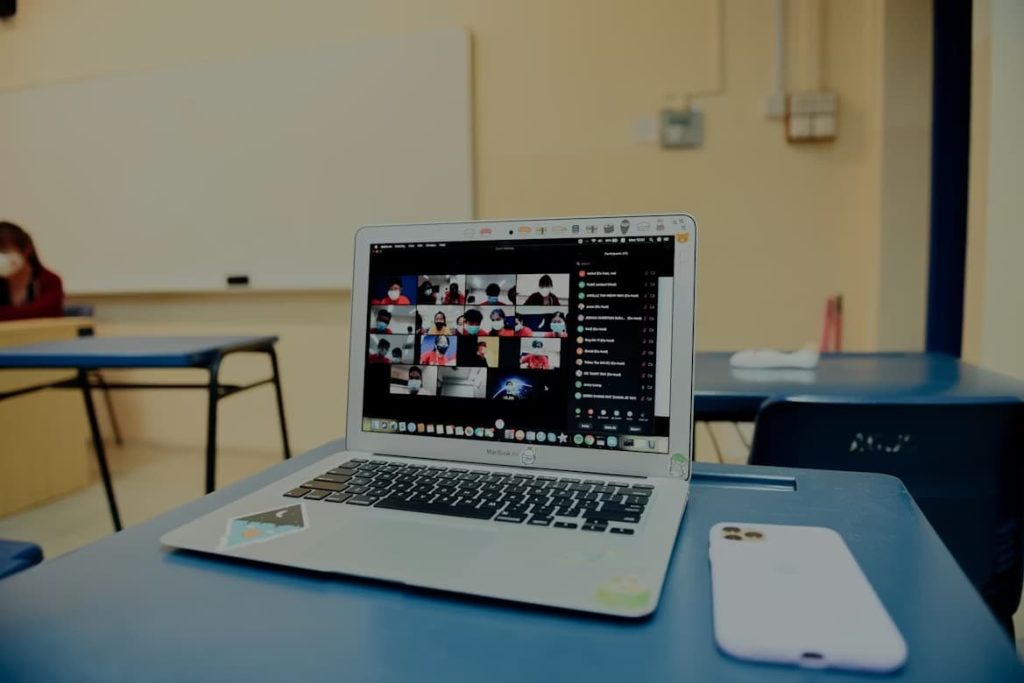
The assumption that younger generations are naturally comfortable with technology is one of those ideas that gets repeated often enough to feel like fact. A new study co-authored by an Effat University researcher pushes back on it — not by arguing that young people are technologically incompetent, but by showing that confidence with technology in general does not automatically translate into confidence with e-learning platforms specifically, and that the gap between the two has real consequences for how well online education actually works.
The study was conducted during the COVID-19 pandemic, a period in which the shift to fully online education was not gradual or voluntary but sudden and total. For many students and professors, the classroom disappeared overnight and was replaced by a screen. What the research reveals is that the experience of that transition — and the barriers it created — looked very different depending on whether you were on the student side of that screen or the teacher side.
Students and Teachers Are Not Struggling With the Same Things
For students, the primary driver of frustration and dissatisfaction with e-learning was a sense of deficient computer skills. When all education is delivered through digital platforms, a lack of confidence in those platforms does not stay contained — it spreads into the learning experience itself, producing anxiety, disengagement, and boredom. Technology is supposed to be the medium through which learning happens. When students are not comfortable with it, it becomes an obstacle instead.
For professors, the picture is different. The most important factor in teacher satisfaction with e-learning was not their own technical confidence but the level of institutional support their university provided for the e-learning process. What this means in practice is concrete and specific: clear instructions and defined obligations, a coherent long-term strategy for online education, and access to specialised software where the standard tools fall short. Professors who felt their institution had invested seriously in supporting the transition reported significantly higher satisfaction than those who felt left to navigate it alone.
This distinction matters because it points toward different solutions. Addressing student dissatisfaction requires building digital confidence and reducing the skills gap between learners. Addressing teacher dissatisfaction requires institutional commitment — policy, strategy, and resource provision at the organisational level.
What the Survey Found
The study surveyed students and professors at the Instituto Politécnico Nacional in Mexico, the country’s second-largest university. Approximately four-fifths of respondents were students and one-fifth were professors, with 29 questions asked across a five-point agreement scale.
Several findings from the data are worth noting directly. Zoom was the dominant platform by a significant margin, used by 95% of respondents. Around a quarter of all respondents reported being unhappy with the e-learning tools available to them. Overall satisfaction was not equal between the two groups — teachers reported higher satisfaction than students. And a low sense of community emerged as a major factor in student dissatisfaction, with the absence of the social dimension of in-person learning registering as a significant loss for many respondents.
The study did not conclude that e-learning is inherently inferior to in-person education. More than half of respondents agreed that integrating technology into learning can be beneficial, particularly when active learning strategies are part of the design. But the research is clear that online education does not create equal experiences for all participants. For some students and teachers, it removes barriers. For others, it creates new ones — and those people are experiencing those adverse effects in real time, in every online class they attend or deliver.
What Institutions and Policymakers Should Do
The study’s recommendations are addressed to the people and organisations with the power to change the conditions under which e-learning happens.
Closing the digital skills gap among students has to be a priority. Unequal confidence with e-learning technologies produces unequal learning outcomes, and that disparity does not resolve itself without deliberate intervention. Cultivating digital skills in the wider community, ensuring internet accessibility, and improving ICT infrastructure are identified as foundational requirements — the baseline conditions without which everything else is harder.
University policy also needs to be reviewed with more ambition. Better digital resources, clearer institutional strategies for online education, and hybrid learning models that ensure educational coverage for marginal and underserved groups should be treated as core commitments rather than optional enhancements.
The researchers also identify two areas for future investigation that deserve attention now. The first is whether more sophisticated approaches to digital collaborative spaces could address the sense of community that students are currently missing in virtual classrooms — a question that goes to the social dimension of learning that platforms like Zoom, however dominant, have not fully solved. The second is what happens to e-learning when a crisis disrupts the technology access it depends on. Offline recovery systems and contingency strategies for educational continuity are not pressing concerns in normal conditions. The pandemic showed, with some force, that normal conditions are not guaranteed — and that the time to think carefully about those questions is before they become urgent.